
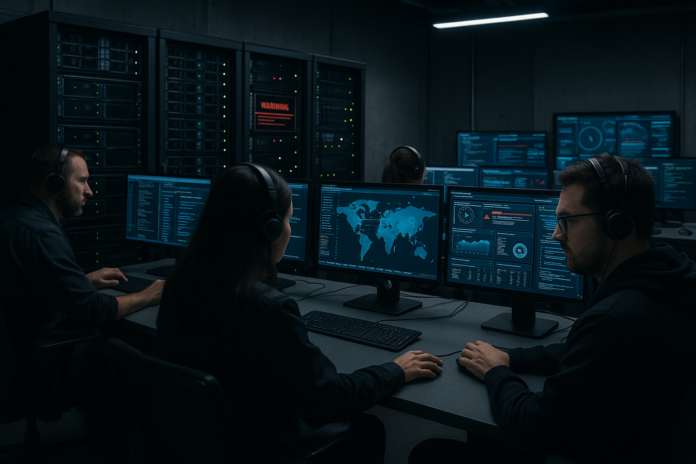
As the use of AI agents accelerates, local AI deployment security has emerged as a primary concern for organizations seeking to maximize privacy, control, and resiliency. The move towards self-hosted AI agents—such as Hermes Agent, CrewAI, LangGraph, and OpenHands—requires a rigorous approach to security architecture, operational controls, and economic planning, especially as VRAM requirements shift the economics and logistics of deployment.
Understanding Local AI Deployment Security
Local AI deployment security centers on safeguarding agent execution environments, models, datasets, and user interactions from external and internal threats. Compared to cloud-based AI, local deployments offer better control over data residency, direct access control, and the potential for air-gapped operation. However, these advantages bring new challenges: physical security, tighter configuration needs, and increased accountability for patching and monitoring.
Self-hosted AI agents—such as those built on Hermes Agent or CrewAI—may handle sensitive data, orchestrate multi-stage automation, or interact with critical operational systems. Any compromise in an agent can cascade through digital workflows, highlighting the importance of sound perimeter defenses, robust authentication mechanisms, and continuous monitoring of agent decisions and access patterns.
Key Security Risks in Local AI Deployments
- Unauthorized Access: Local servers must be protected from physical and network intrusions. Role-based controls and network segmentation reduce the risk of lateral movement after a breach.
- Model Tampering and Poisoning: Self-hosted models are susceptible to tampering or poisoning unless guarded by cryptographic signatures and integrity verification tools.
- Data Leakage: Even with local deployments, agents may inadvertently expose data via logs, misrouted API requests, or poorly isolated workspaces.
- Improper Agent Isolation: In orchestration frameworks like CrewAI or AutoGen, multiple agents may collaborate or compete for resources. Misconfigured isolation can lead to privilege escalation or accidental data exchange.
- Unpatched Vulnerabilities: Security in local AI hinges on timely application of firmware, OS, and third-party library patches. Dependency tracking and SBOM (Software Bill of Materials) management become core practices.
- VRAM Resource Management: Access to powerful GPUs for inference brings physical security, scheduling, and quota challenges, with risks of resource starvation or Denial of Service (DoS) attacks.
VRAM Economics and Security Planning
Deploying high-performance AI agents locally often requires GPUs with high VRAM capacities. The pressure on VRAM economics—balancing hardware costs, energy consumption, and physical security—impacts both feasibility and attack surface. Investing in better GPUs enables advanced self-hosted models but also concentrates value in specific hardware assets, making them high-priority targets for exfiltration or sabotage.
Effective VRAM management involves:
- Controlling physical access and inventorying hardware deployments
- Implementing OS-level or containerized isolation of agent workloads
- Limiting user-level access with strict quotas
- Monitoring for unnatural VRAM usage spikes that could indicate abuse
- Regularly reviewing hardware firmware for security issues
Strategic investment in VRAM affects not only AI agent performance but also the ability to sustain secure, private inference, especially for organizations with air gap or regulatory requirements.
Self-Hosted AI Solutions and Their Security Postures
The practical guide to Hermes Agent highlights an ecosystem where self-improving agent frameworks compete on modularity, orchestration capability, and security features. Alongside Hermes Agent, solutions like CrewAI and LangGraph demonstrate different approaches to process isolation, logging, access control, and operational transparency.
- Hermes Agent: Offers robust agent lifecycle management, granular policy enforcement, and clear separation of agent tasks, alongside community-driven transparency into security updates.
- CrewAI: Features multi-agent orchestration with built-in audit logging, privilege restriction, and support for secure communication channels.
- LangGraph, AutoGen, OpenHands: Provide flexible workflows, support for custom access plugins, and evolving strategies for containerized execution and RBAC (role-based access control).
Choosing a security-first agent framework involves evaluating update cycles, support for hardware attestation, and documented incident response processes, as well as real-world community trust signals.
Best Practices for Secure Local AI Deployments
- Adopt a zero-trust security model: Assume all endpoints and agents are potential vectors for compromise.
- Enforce network segmentation and multi-factor authentication, even for administrators.
- Isolate agents and workloads using secure containers, VMs, or operating system user accounts.
- Continuously monitor agent activity, system logs, and hardware usage.
- Engage with the community for threat intelligence and response playbooks.
FAQ: Local AI Deployment Security
- What are the main security risks in local AI deployments?
The main security risks in local AI deployments include unauthorized access, model tampering, data leakage, insufficient isolation between agents, unpatched vulnerabilities, and improper resource controls. - How do VRAM costs impact security planning for AI agents?
VRAM costs affect security planning by determining hardware requirements, which dictate physical access control and attack surface areas. Budgeting for premium VRAM can enable air-gapped scenarios with higher security guarantees, though complexity and attack surfaces may rise with scale. - Which self-hosted AI solutions prioritize security?
Solutions like Hermes Agent, CrewAI, LangGraph, AutoGen, and OpenHands incorporate features for agent isolation, activity monitoring, and robust access controls, making them leading choices for secure self-hosted AI.
With the increasing adoption of advanced local AI agents, rigorous security practices, careful resource planning, and strategic solution selection remain essential to protect enterprise data, operations, and reputation.