
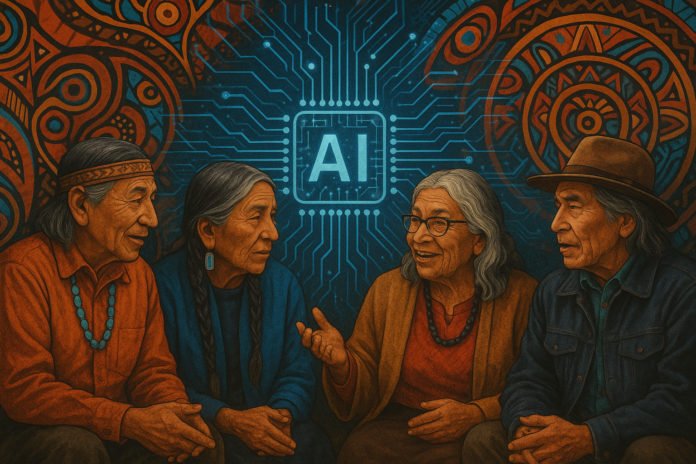
Artificial intelligence has become a double-edged sword for Indigenous communities in Canada, especially when it comes to creating content such as language dictionaries, elders’ teachings, and historical documentation.
Experts have raised alarms about AI-generated Indigenous language materials and cultural information circulating online, warning that they could be detrimental rather than helpful to ongoing efforts at cultural and language revitalization.
Risks of Uncurated AI-Generated Content
While the promise of AI tools to support preservation of Indigenous languages is appealing, the current reality is fraught with challenges. AI systems that have not been curated or controlled by the Indigenous communities themselves can produce inaccurate, misleading, or culturally inappropriate outputs.
These inaccuracies can misrepresent the nuances and context of Indigenous languages, which are deeply connected to identity and heritage. Misinformation propagated through AI-generated content risks eroding trust and hindering revitalization initiatives that rely heavily on authenticity and respect for tradition.
Community-Controlled AI: A Path Forward
In response, some First Nations communities are pioneering the use of structured knowledge system AI. These systems are thoughtfully curated and managed internally by the community, ensuring that the cultural content and language data are accurate and respectfully handled.
This approach places control firmly in the hands of Indigenous peoples, safeguarding sensitive cultural knowledge and preventing misuse or distortion. By using AI as a tool under community governance, these groups aim to leverage the technology’s benefits without sacrificing cultural integrity.
Balancing Innovation and Respect
The intersection of advanced AI technology with Indigenous language and cultural preservation highlights the importance of respectful innovation. Indigenous leaders and experts stress that any AI solution must incorporate community consent, continuous collaboration, and cultural protocols.
Only through such mindful integration can AI contribute meaningfully to reversing the decline of Indigenous languages and supporting long-term revitalization goals.
As AI continues to evolve, its role in Indigenous cultural preservation will depend largely on who controls the narrative and data—now more than ever underscoring the imperative for Indigenous-led development and stewardship of these emerging technologies.