
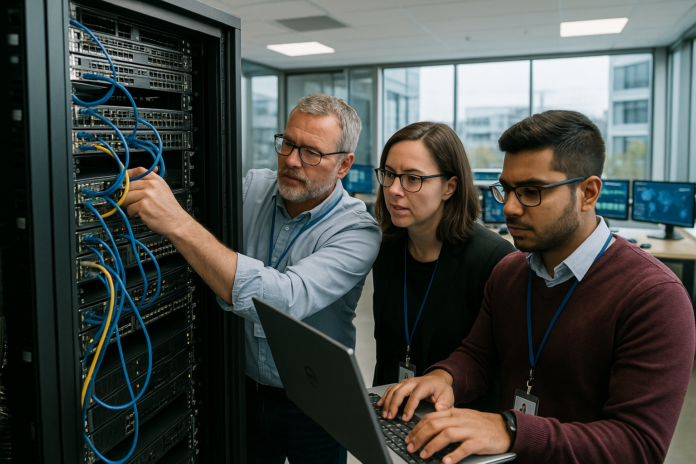
Canadian organizations at the forefront of finance, energy, and healthcare are increasingly seeking ways to deploy artificial intelligence solutions that combine performance, security, and compliance. As leaders report greater return on investment from AI, the focus is shifting toward local AI infrastructure—a strategic move to address skill gaps and operational challenges faced by critical industries.
How Local AI Infrastructure Powers Canadian AI Deployment
With evolving regulatory and privacy requirements, many Canadian firms are considering self-hosted AI systems as a way to gain direct oversight over their data and AI models. Local AI infrastructure allows organizations to build, deploy, and operate machine learning workloads on premises or within Canadian data centers, avoiding concerns over data sovereignty and unpredictable cloud costs.
This movement is buoyed by the maturity of open-source machine learning frameworks such as TensorFlow and PyTorch. When orchestrated with distributed computing tools like Horovod and Ray, these frameworks enable scalable, production-grade AI deployments tailored to enterprise needs.
Accelerating Innovation and ROI in Canadian Industries
Senior leaders across Canadian industries are reporting a clear positive return on AI initiatives. From optimizing supply chains in manufacturing to predictive analytics in energy grids, local AI infrastructure provides the agility to customize solutions for unique operational requirements. High-performance on-premise clusters, often powered by robust AI hardware, reduce data transit times and keep sensitive information within national borders. This is especially vital for healthcare organizations processing patient data or financial institutions governed by strict compliance mandates.
Optimistic Outlook: The Advantages of Local AI Infrastructure
- Data Sovereignty: Ensures sensitive and regulated data remains in Canada, helping organizations meet provincial and national regulations.
- Operational Resilience: Reduces reliance on global cloud providers and external networks, supporting business continuity for critical functions.
- Advanced Customization: Permits deep tuning of AI systems and integration with existing operational technology stacks unique to each sector.
- Cost Control: Empowers organizations to manage infrastructure spend and avoid rapid cloud cost escalations.
From Proof of Concept to Enterprise-Wide AI Orchestration
Many Canadian firms are scaling up from pilot projects to enterprise-wide AI orchestration, leveraging local expertise in systems engineering and machine learning. Tools like Ray and Horovod help orchestrate complex AI workloads across hybrid hardware environments, making the transition to self-hosted AI systems practical even for organizations with limited in-house data science teams.
With increasing support for open standards, industry collaboration, and investment in local computing resources, the rise of local AI infrastructure is set to continue. These factors are positioning Canada as a leader in resilient, scalable AI deployment for critical industries.
Frequently Asked Questions
- What are the benefits of local AI infrastructure? Local AI infrastructure offers data sovereignty, lower latency, enhanced security, and greater operational resilience, especially important in regulated and critical industries.
- How can critical industries benefit from self-hosted AI? Critical industries can leverage self-hosted AI systems for more reliable performance, compliance with Canadian data regulations, and reduced dependency on external cloud providers.
As organizations advance their digital transformation journeys, a commitment to local AI infrastructure signals an optimistic future for Canadian innovation and sustainable AI adoption.
Related InsightTrack Analysis
- The Strategic Role of Local and Self-Hosted AI Solutions in Canada’s AI Ecosystem
- Local AI Deployment Trends in Canada: Key Drivers and Enterprise Impact
- Enterprise Adoption Analysis: AI Agent Orchestration Frameworks
- NVIDIA vs AMD for Local AI Inference: BC Data Centre Hardware Analysis
- Local AI Deployment Security: Analysis of Self-Hosted AI Agent Risks