
In the rapidly evolving world of AI inference systems, security and efficiency increasingly depend on hardware decisions rooted in the realities of VRAM economics. As organizations in Canada and globally accelerate AI deployments—from the datacenter to the edge—the right sizing of video RAM (VRAM) has become a pivotal factor not just for performance, but for risk management, cost controls, and security assurance.
Understanding VRAM Economics in AI Hardware
At its core, VRAM economics involves evaluating the balance between GPU pricing, available memory, and the specific needs of a given AI workload. Edge device designers and enterprise architects alike must analyze hardware costs in the context of both security requirements and financial sustainability. Over-provisioning VRAM may inflate costs unnecessarily, while under-provisioning can lead to bottlenecks, degraded inference speed, or exposure to vulnerabilities in multi-tenant systems.
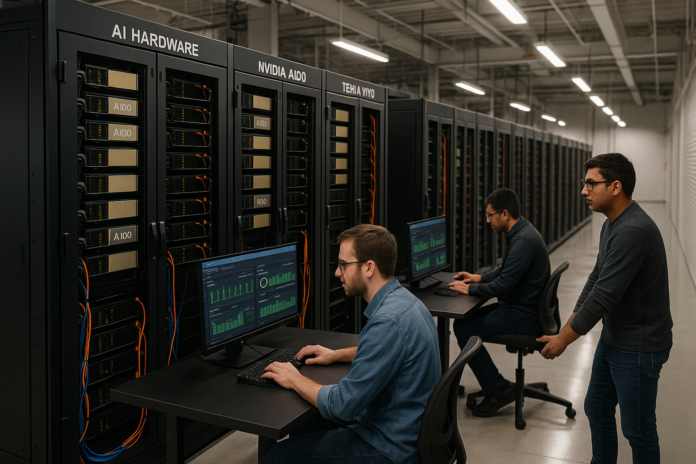
Key GPU products such as the NVIDIA A100, Tesla V100, Google TPU v4, and AMD Radeon Pro illustrate the landscape of available solutions. Each offers distinct cost-to-performance ratios, with the A100 and Google TPU v4 often dominating large-scale datacenter deployments, and Radeon Pro cards frequently chosen for budget-conscious or edge-focused designs.
Security-Driven Impacts of VRAM Choices
For organizations handling sensitive data, the VRAM allocation on AI hardware is not merely a question of throughput. Security implications arise when hardware is stretched beyond its effective capacity, sometimes leading to unintended data persistence or exposure on shared GPUs. Sizable VRAM headroom allows for encrypted batched inference and sandboxing, enabling more robust separation of workloads. Edge scenarios, especially in privacy-conscious Canadian applications like healthcare or critical infrastructure, demand hardware right-sizing to minimize attack surface without excessive hardware cost.
GPU Pricing and Hardware Cost Dynamics
Modern GPUs with expansive VRAM—such as the NVIDIA A100—come with significant procurement costs, outpacing mainstream hardware by multiples. These high-end platforms generally benefit AI models with substantial batch processing and demanding memory footprints. In contrast, the Tesla V100, while slightly older, provides a practical balance of price and VRAM for many inference tasks. AMD Radeon Pro lines deliver an alternative for scenarios that demand lower upfront costs, albeit sometimes at the expense of ecosystem support or raw performance. For cloud-oriented deployments, Google TPU v4 units allow elastic scaling but introduce recurring usage costs that organizations must weigh against on-premise investments.
Hardware cost calculations must extend beyond shelf price. Total cost of ownership often includes:
- Initial hardware expenditure and lead time
- Ongoing energy and cooling demands
- Operational risks tied to hardware failure and replacement cycles
- Security mitigation measures made necessary by VRAM deficits
VRAM Economics and Canadian Market Considerations
The Canadian market presents additional context, with many organizations balancing mandates for data residency, local compliance, and critical infrastructure protection. Right-sized AI hardware helps control costs within tight security policies, especially as the push to the edge continues across healthcare, public safety, and utilities. By aligning VRAM capacity with actual model size and throughput requirements, organizations minimize unnecessary spending while maintaining high trust and privacy standards required under Canadian regulations.
Cost-Effectiveness and Security for AI Inference Systems
Determining the most cost-effective GPU or accelerator for a given AI workload involves a nuanced evaluation:
- Workload characteristics: batch size, real-time inference latency, and model size
- Available VRAM relative to data size per transaction
- Ongoing GPU pricing trends and supply constraints
- Security features, such as memory isolation and encryption support
For many, the NVIDIA A100 remains the default for high-volume inference, but the Tesla V100 and AMD Radeon Pro remain strong contenders where budget or efficiency is prioritized. Google TPU v4 expands the palette for AI practitioners looking for cloud-first or hybrid deployments.
FAQ: Key Questions About VRAM Economics
- What are the economic factors affecting VRAM choices?
Economic factors influencing VRAM choices include GPU pricing, hardware acquisition costs, the workload and batch size of AI inference systems, and the long-term operating expenses such as power consumption and system cooling. - How do VRAM prices impact AI deployment decisions?
VRAM prices directly affect AI deployment by determining the cost efficiency of running large models and the ability to scale or deploy at the edge. Higher VRAM may increase upfront costs but improve security and speed for certain applications. - Which GPUs are most cost-effective for AI inference?
Popular cost-effective GPUs for AI inference include the NVIDIA A100, Tesla V100, and AMD Radeon Pro. Google TPU v4 is also considered for specific workloads and cloud-based deployments.
In summary, VRAM economics plays a central role in the security-driven AI hardware selection process. The right investment delivers competitive throughput, mitigates operational and security risks, and ensures long-term cost efficiency in both Canadian and international AI inference ecosystems.
Related InsightTrack Analysis
- Technical Comparison of Next-Gen GPU Technologies for Enterprise AI
- GPU Limitations in Local AI Deployments: Hardware Bottlenecks and Economic Realities
- Google-Blackstone AI Cloud: A Skeptical Look at VRAM Economics
- Agentic AI Systems in Enterprise: Adoption, Benefits, and Orchestration Frameworks
- Innovative Cybersecurity Solutions: Bridging the Human Gap in AI Security