
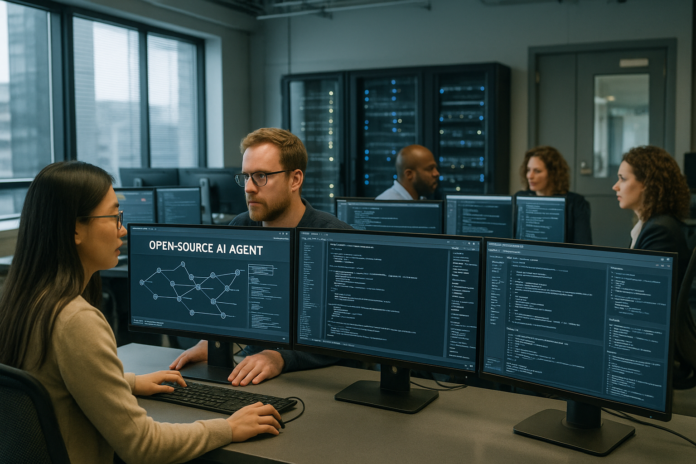
Open-source AI agents have fueled a wave of innovation in AI workflow automation and agent orchestration frameworks, offering attractive options for organizations seeking flexibility and reduced licensing costs. However, a closer examination reveals significant skepticism is warranted before deploying these solutions at scale, especially in enterprise environments where security, consistency, and reliability are paramount.
Evaluating Open-Source AI Agents in Practice
The promise of open-source AI agents is clear: customizable, rapidly evolving tools such as OpenClaw, LangGraph, AutoGen, and CrewAI claim to offer modular agentic AI capabilities for everything from customer service automation to code generation. Popular among developers and research groups, these frameworks enable novel workflows and low-cost experimentation. Yet success in controlled settings does not automatically translate to operational robustness or comprehensive security.
One recent example is the emergence of prompt injection attacks targeting multimodal and agent-powered models. According to security researchers, as documented in the CSO Online article, prompt injection via images or crafted text can manipulate how vision-language agents interpret data and execute instructions. Open-source agents — often updated and maintained by dispersed, volunteer-driven communities — generally lack the sophisticated security infrastructure or rigorous vetting processes typical in proprietary solutions. This exposes organizations to real risks, especially when integrating these frameworks with sensitive information or critical systems.
The Security Paradox of Open-Source Agentic AI
Although open-source AI agents encourage transparency and rapid iteration, they also create a security paradox. Community-led updates may be delayed or inconsistent. Forks of major frameworks like OpenClaw or LangGraph often lack security-hardened releases or support for complex enterprise authentication standards. In the event of a newly surfaced vulnerability — like the novel prompt injection attacks on image-processing agents — mitigation relies on the ability of community maintainers to patch code swiftly, which may not align with organizational risk thresholds.
Moreover, open-source agentic AI frameworks frequently excel at demonstration-level orchestration but struggle with robust, audited integration points—especially around authorization, logging, and compliance. Features such as agent orchestration across heterogeneous workflows often remain experimental, increasing the risk of unpredictable behaviors and silent failures. For organizations weighing workflow automation using platforms like AutoGen or CrewAI, these gaps can translate directly into operational risk or compliance headaches.
Agent Orchestration Frameworks: Flexibility or Fragmentation?
The ecosystem surrounding open-source agent orchestration frameworks is dynamic but fractured. While solutions like LangGraph and CrewAI offer unprecedented flexibility in building multi-agent systems, they often require deep in-house expertise for reliable deployment. Documentation and configuration vary widely; some critical integrations may be maintained by single independent developers. As a result, even basic upgrades or problem diagnosis can lead to costly downtime—outpacing the theoretical cost savings of an open-source approach.
Commercial agentic AI platforms, by contrast, typically provide end-to-end support, integration playbooks, and Service Level Agreements (SLAs). This is a fundamental differentiator when mission-critical workflow automation and data security are non-negotiable. While open-source agents thrive in research and lightweight prototyping, their value proposition weakens in production environments where business continuity matters most.
Should You Adopt Open-Source AI Agents?
When weighing open-source versus commercial AI agents, organizations must consider:
- Security controls: Can your team rapidly patch and monitor new threats like prompt injection?
- Integration expertise: Do your architects have expertise in unifying disparate agent orchestration frameworks?
- Support model: Is reliable, ongoing support available when issues arise?
- Compliance and auditability: Can open-source frameworks meet regulatory and internal audit standards?
In many enterprise scenarios, the practical limits of open-source AI agents mean that commercial solutions may offer better alignment with organizational needs for risk management, scalability, and robust technical support.
FAQ: Open-Source AI Agents
- What are the limitations of open-source AI agents?
Open-source AI agents can be limited by inconsistent updates, lack of robust security controls, and fragmented support compared to commercial solutions. Their reliance on community-driven development also makes them more vulnerable to prompt injection attacks and integration risks. - How do commercial AI agent platforms compare to open-source alternatives?
Commercial platforms offer stronger security, enterprise-grade support, and streamlined integration, while open-source frameworks provide flexibility and customization but require more hands-on risk management and technical oversight. - Which factors should be considered when choosing between open-source and proprietary AI agents?
Consider integration complexity, security demands, community support, total cost of ownership, and the organization’s tolerance for operational risk and ongoing maintenance.
Organizations should approach the adoption of open-source AI agents with a clear-eyed assessment of both their capabilities and their limitations, especially as agentic AI continues to evolve amid new types of vulnerabilities and operational requirements.
Related InsightTrack Analysis
- Practical Analysis of AI Agent Orchestration Frameworks for Workflow Automation
- AI Agent Orchestration Frameworks: Practical Impact on AI Workflow Automation
- How AI Agent Orchestration Frameworks Are Transforming Workflow Automation
- AI Agent Orchestration Frameworks for Agentic AI Workflow Automation
- AI Agent Orchestration Frameworks: Implementation Analysis for Workflow Automation