
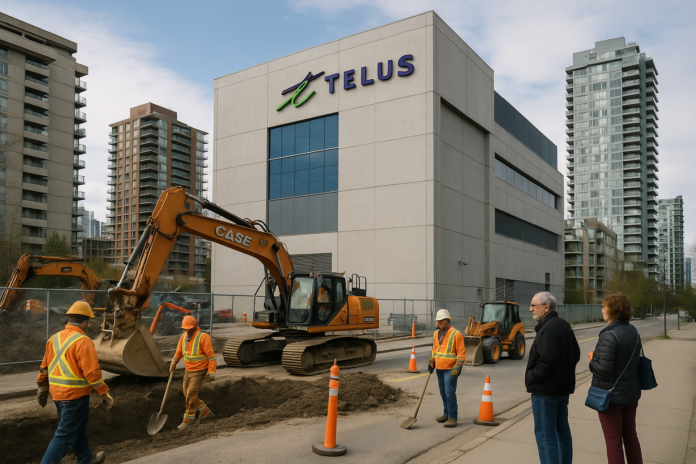
Federal subsidies for AI data centres are fueling a contentious debate throughout Vancouver, as major projects led by Telus aim to grow the city’s AI infrastructure. While touted as a boon for the growing Vancouver AI ecosystem, many local residents and advocates are voicing skepticism over the tangible costs these sprawling centres may impose on communities.
The Real Cost of Federal Subsidies for AI Data Centres
Advocates for these federal subsidies argue that expanding local AI infrastructure will place Vancouver at the forefront of artificial intelligence development in Canada. Yet, critics caution that the benefits are unevenly distributed—and, for those living near new data centres, the risks may outweigh the rewards.
The involvement of Telus, a central player in the project’s execution, is framed as a mark of Canadian innovation. Federal investment is promoted as a means of enhancing homegrown AI capacity, potentially attracting further interest from organizations such as AI Canada and the BC Tech Association. But on the ground, the Vancouver city council and community groups are fielding mounting concerns about the residential impact of AI development.
Residential Impact of AI Development in Vancouver
Neighborhoods neighboring these construction sites face intensified traffic, noise, and disruption—challenges that may persist well after construction concludes. Residents worry about heightened energy usage, increased heat output, and demands on public utilities. For many, the perceived residential impact of AI development has begun to overshadow promised community benefits.
The proximity of large data facilities to established residential zones brings risk of undermining local property values. It also risks increasing rent and cost of living pressures that already burden Vancouverites. Importantly, critics point out that few mechanisms currently ensure these AI centres’ successes translate into economic or social returns for nearby residents. As discussions play out in city council chambers, questions remain about whose interests federal subsidies are ultimately serving.
What Does Expanding Local AI Infrastructure Really Offer?
Supporters of the funding underscore its role in advancing Vancouver’s AI ecosystem and positioning Canada as a global AI leader. However, critics note that large-scale data centres primarily benefit large corporations. Local small businesses and tech startups—often championed by organizations like the BC Tech Association—may see little direct improvement in their access to advanced AI tools or infrastructure.
There is also a broader question as to whether reliance on massive, centralized facilities is the most resilient path forward for Canadian AI innovation. Alternatives such as distributed, community-driven infrastructure are receiving less attention, even though they may better align with sustainable development goals.
Local Perspectives: Telus, City Council, and Community Stakeholders
Telus continues to highlight the strategic advantages of their AI data centre investments for British Columbia’s technology sector. At the same time, the Vancouver city council faces increasing pressure to balance economic development with its responsibility to local communities. Engagement from industry organizations, including AI Canada, points to a desire for dialogue, but many residents report feeling disenfranchised.
Community members have publicly called for rigorous local consultation, environmental review, and clear accountability from both Telus and federal authorities. The absence of robust consultation processes has further galvanized opposition among those who live and work in affected neighborhoods.
Can We Support AI Growth Without Local Harm?
A growing chorus in Vancouver is demanding innovation—without the negatives seen in the current approach. Critics suggest that public funding for AI could be more equitably distributed by supporting decentralized infrastructure, workforce development, or sustainable energy upgrades in existing facilities. This would not only align with broader climate objectives but also embed AI development in a more inclusive and community-forward manner.
There is a clear appetite for policies that balance investment in local AI infrastructure with comprehensive impact analysis, transparent planning, and resident engagement. Without these elements, the intended uplift from federal subsidies for AI data centres may be negated by growing community resentment and overlooked local consequences.
FAQ
- What are the potential downsides of federal subsidies for AI data centres in Vancouver?
Potential downsides include increased energy consumption, noise pollution during and after construction, strain on public infrastructure, and possible negative effects on nearby residential property values. Residents may also face environmental impacts and community disruption. - How do local residents and businesses view these projects?
Many local residents and businesses express skepticism, citing concerns about quality of life, increased costs, and a lack of meaningful consultation. There are worries that the benefits of AI development may not be equitably shared with the local community. - Are there alternative ways to support AI development without negative side effects?
Alternatives include supporting smaller, distributed AI infrastructure, investing in green energy upgrades, consulting local communities in planning stages, and funding education or workforce initiatives centered on AI rather than solely building large data centres.
As the Vancouver AI ecosystem continues to evolve, careful consideration of the community’s voice will be essential to crafting policies that genuinely benefit both innovation and the people who call the city home.
Related InsightTrack Analysis
- TELUS AI Investment: Impacts on Canadian AI Agent Infrastructure
- NVIDIA vs AMD for Local AI Inference: BC Data Centre Hardware Analysis
- Telus AI Megafactories: Strategic Impact on Canadian AI Infrastructure
- Economic Impact of Local AI Data Center Development in Canada
- How South Florida AI Data Centers Are Powering Regional AI Innovation