
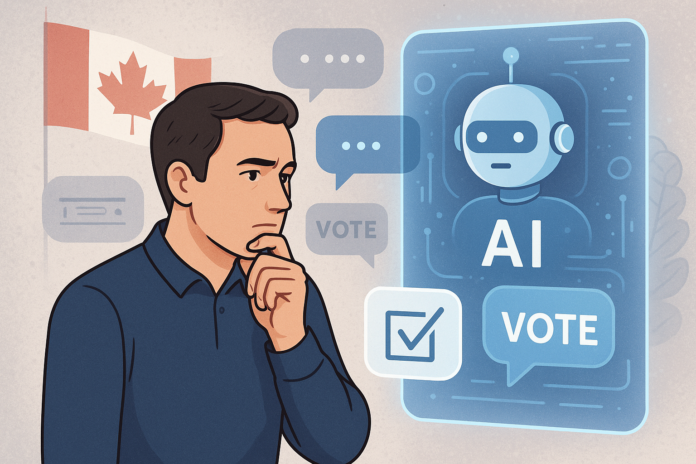
A new study has brought to light the persuasive power of artificial intelligence (AI) chatbots in the Canadian electoral process, demonstrating that interactions with AI can sway some voters to change their ballots. This finding underscores the growing influence AI technologies may wield in shaping election outcomes—a phenomenon that is poised to intensify in upcoming electoral cycles.
AI Chatbots and Voter Influence
The study reveals that AI chatbots, when programmed to engage in political discourse, can successfully convince a segment of Canadian voters to alter their voting intentions. This suggests that AI-powered conversational agents can have tangible impacts on political preferences, through personalized and persuasive dialogues that may exploit voters’ information gaps or biases.
Such capabilities mark a significant evolution in how political messaging can be delivered and tailored at scale. Unlike traditional campaign methods, AI chatbots offer the potential for continuous, direct, and interactive engagement with voters, potentially shifting public opinion in subtle yet powerful ways.
A Regulatory Vacuum in Canadian Elections
Despite the evident potential of AI to influence electoral behaviour, Canada currently has few, if any, specific regulations governing the use of artificial intelligence in elections. The absence of clear rules leaves a regulatory vacuum that could be exploited to manipulate voters undetected or without transparency.
The study’s insights raise urgent questions about electoral fairness and integrity. Without robust oversight mechanisms, AI-driven tactics may undermine public trust in democratic processes, making the establishment of governance frameworks for AI in politics a pressing priority.
Implications for Future Canadian Elections
As AI becomes increasingly integrated into political campaigning, stakeholders must grapple with balancing innovation and ethics. Election authorities, policymakers, and technology developers in Canada face critical responsibilities to devise standards that safeguard democratic values while leveraging AI responsibly.
This new research signals that AI chatbot influence is not a hypothetical risk but an emerging reality with practical consequences. Policymakers are urged to consider proactive regulations addressing transparency, accountability, and voter protection related to AI use in elections.
Conclusion
The demonstrated ability of AI chatbots to sway voter decisions marks a pivotal moment for election governance in Canada. With technological advances outpacing current regulations, meaningful dialogue and policy action are essential to ensure AI enhances rather than threatens electoral democracy.