
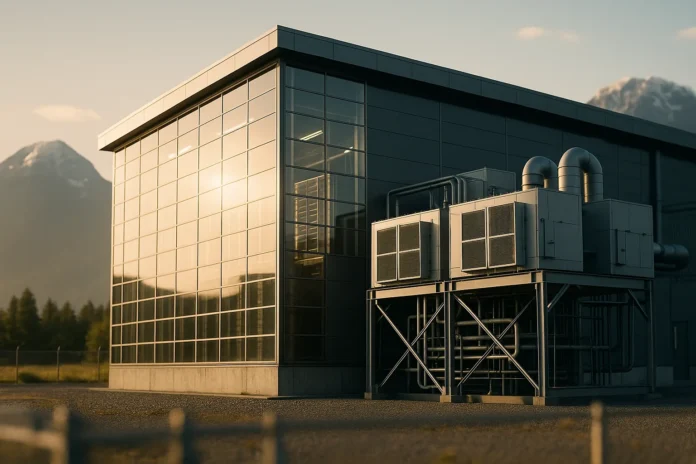
Vancouver is becoming a node in the global AI infrastructure build-out. Large-scale data centre projects are being announced or developed in the region, attracted by relatively stable power grids, cooler ambient temperatures, and proximity to trans-Pacific fibre routes. For the companies behind these facilities, the economics are straightforward. For Vancouver’s local AI community, the implications deserve a harder look.
The Infrastructure Arrives — But for Whom?
The data centres being developed in and around Vancouver are not being built for local consumption. They are being built by, or contracted to, hyperscalers and large AI operators — organizations running training workloads and inference at a scale that has little to do with a Vancouver-based startup trying to fine-tune a model or a university lab running simulations. The physical presence of GPU clusters in a region does not automatically translate into affordable or accessible compute for local actors.
This distinction matters. Canada has invested considerably in positioning itself as an AI nation — through federal programs, the Pan-Canadian AI Strategy, and support for institutes like Mila, Vector, and Amii. But the infrastructure layer of AI, the actual compute on which models are trained and run, remains concentrated in the hands of a small number of global platforms. Local data centre expansion, absent deliberate policy design, does not change that dynamic.
Energy Is the Constraint Nobody Wants to Talk About
Data centres are not passive tenants. A modern AI training facility can draw anywhere from 50 to several hundred megawatts of power — comparable to a small city. BC Hydro, which serves the Vancouver region, operates on hydroelectric generation that is largely clean but not unlimited. Capacity commitments to large industrial users reduce what is available for residential expansion, electrification of transit and heating, and the broader decarbonization goals British Columbia has committed to provincially.
The Tyee’s framing of this development as a concern rather than a straightforward win reflects a growing tension in Canadian energy policy: the same electrical grid being positioned as a clean-energy advantage for economic development is also finite. Allocating significant portions of it to compute infrastructure that primarily serves non-Canadian corporate interests — and that can be relocated when economic conditions change — involves real trade-offs that are rarely made explicit in economic development announcements.
The Local GPU Market: Access Is Not Proximity
For Canadian AI companies, particularly smaller ones without hyperscaler relationships or significant venture backing, access to GPU compute remains a persistent constraint. The dominant pathway is through cloud platforms — AWS, Google Cloud, Microsoft Azure — where pricing is set globally and demand spikes during major model release cycles can affect availability. The presence of physical data centre capacity in Vancouver does not change this calculus unless that capacity is made available to local users at competitive rates through deliberate commercial or policy mechanisms.
There is a model for doing this differently. Some jurisdictions have negotiated community benefit agreements as conditions of data centre approvals — requiring a portion of compute capacity to be made available to local academic or startup users at below-market rates. Others have tied large industrial power contracts to workforce development commitments or research partnerships. Vancouver and British Columbia have not, to date, established a clear framework along these lines.
- Hyperscale data centres optimized for AI training typically run proprietary or contracted GPU clusters not accessible on the open market.
- Colocation facilities, which rent physical space and power to customers, offer more flexibility but still require customers to procure their own hardware or use cloud APIs.
- Regional cloud providers and compute co-ops represent an emerging alternative, but remain small relative to demand.
What a More Deliberate Approach Would Look Like
The arrival of AI infrastructure in Vancouver is not inherently bad. Compute capacity, jobs in construction and operations, and the tax base generated by large facilities are real benefits. The concern is not the data centres themselves but the absence of conditions attached to their development.
A more deliberate policy framework would ask several questions before approvals proceed. What portion of the facility’s capacity, if any, will be accessible to Canadian researchers or companies? What are the power commitments, and how do they interact with BC Hydro’s long-term capacity planning? What happens to the facility — and the jobs — if the operating company restructures or relocates workloads?
These are not hypothetical concerns. The AI infrastructure market is moving fast, and the companies investing in it are doing so under business conditions that can change quickly. British Columbia and Vancouver are not passive beneficiaries of this investment — they are also absorbing the costs, in energy, in land use, and in the opportunity costs of grid capacity committed to data centres rather than other uses.
The Bigger Picture
Canada has a genuine opportunity to shape how AI infrastructure develops on its soil. The Pan-Canadian AI Strategy has focused heavily on talent and research. The infrastructure layer — where the actual compute lives — has received less structured attention, and the default outcome is that it gets built according to the priorities of whoever is building it.
Vancouver’s data centre moment is a test of whether Canadian jurisdictions will treat AI infrastructure as a policy question or simply as economic development. The answer will have consequences for who in Canada actually benefits from the AI economy being built here.