
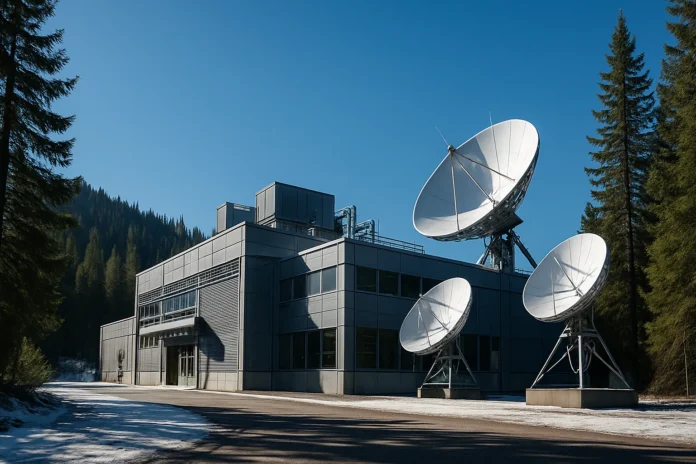
Data centres are not glamorous infrastructure. They are large, power-hungry, water-cooled buildings that hum quietly on the edges of industrial zones. But as AI workloads grow in complexity and scale, they have become some of the most strategically significant pieces of real estate in the modern economy. Vancouver is now entering that conversation — and the arrival of AI-oriented data centre development in the region deserves a more complete analysis than simply tallying the environmental costs.
Why Vancouver, Why Now
Metro Vancouver has several characteristics that make it attractive for data centre development. Access to relatively clean hydroelectric power through BC Hydro gives operators a lower-carbon grid than most North American alternatives. The region’s temperate climate reduces mechanical cooling demands for parts of the year. Proximity to trans-Pacific fibre routes makes it a natural interconnection point between North American and Asian networks. And land — while increasingly scarce — remains more available than in downtown Toronto or central Seattle.
These are not incidental advantages. For companies building AI infrastructure, power availability and grid cleanliness are increasingly decisive factors. As hyperscalers and AI platform companies face growing pressure from investors and regulators over their carbon footprints, British Columbia’s grid profile is a genuine selling point.
The Orchestration Layer: More Than Storage and Compute
Much of the public discourse around data centres treats them as passive warehouses for servers. That framing misses what is actually being built. Modern AI infrastructure increasingly depends on what practitioners call orchestration — the coordination of compute resources, data pipelines, model inference, and real-time workload distribution across distributed systems.
Vancouver-region data centres, if positioned correctly, could serve as orchestration nodes rather than simply bulk compute facilities. That distinction matters. An orchestration node handles the intelligent routing and scheduling of AI tasks — determining which models run where, how data flows between training and inference environments, and how latency-sensitive applications are prioritized. These facilities tend to generate higher-value economic activity, attract more specialized technical talent, and embed themselves more durably in the regional economy.
The opportunity is real, but it is not automatic. It requires deliberate decisions about what kinds of tenants and use cases are recruited, what local talent pipelines are built, and how the facilities are integrated with the broader technology ecosystem in British Columbia.
Legitimate Concerns That Cannot Be Dismissed
The critical perspective on this development — as articulated in outlets like The Tyee — is not without substance. AI data centres consume enormous quantities of electricity and water. A large-scale facility can draw tens of megawatts continuously and use millions of litres of water annually for cooling. In a region already managing energy demand growth and facing long-term questions about water resource pressure, these are serious inputs to the planning calculus.
There are also questions about who captures the economic value. Data centre development can be capital-intensive and relatively low in local employment density. If the primary beneficiaries are large American technology firms while British Columbia absorbs the infrastructure burden and environmental impact, that is a legitimate policy concern — not a fringe objection.
Municipal and provincial governments need to approach this buildout with clear conditions attached: minimum efficiency standards, water recycling requirements, commitments to local procurement and training programs, and transparent reporting on energy sourcing. The leverage to negotiate these terms exists now, while sites are being selected and permits are being sought. It diminishes rapidly once construction is underway.
The Canadian Strategic Dimension
Canada has a broader interest in this conversation that goes beyond any single city. The country has world-class AI research talent, anchored by institutions in Montreal, Toronto, Edmonton, and increasingly Vancouver itself. But Canadian AI research has historically been exported — trained here, commercialized elsewhere.
Domestic AI infrastructure, including the data centres now arriving in Metro Vancouver, creates at least the possibility of a different trajectory. Canadian AI companies building on Canadian infrastructure, subject to Canadian data governance frameworks, represent a more sovereign technology posture. That is not a guarantee — it requires policy support, anchor tenants, and genuine ecosystem development — but the infrastructure is a prerequisite. You cannot run Canadian AI workloads at scale without Canadian compute.
The federal government’s investments in AI compute through programs like the AI Compute Access Fund and the broader National AI Strategy point in this direction. Regional infrastructure development in Vancouver should be seen in that context, not in isolation.
Getting the Balance Right
The arrival of AI data centres in Vancouver is neither straightforwardly good news nor a straightforward threat. It is a development with real costs and real opportunities, and the outcomes will be determined largely by the policy and planning choices made in the near term.
- Energy and water efficiency standards should be non-negotiable conditions of approval, not aspirational guidelines.
- Zoning and permitting processes should distinguish between commodity bulk compute and higher-value orchestration and inference infrastructure, and incentivize the latter.
- Provincial and municipal economic development strategies should actively recruit Canadian AI companies as anchor tenants, not simply accept whatever demand arrives.
- Workforce development commitments should be embedded in development agreements, creating pathways for local technical talent to work in and around these facilities.
Vancouver is not going to opt out of the AI infrastructure buildout. The economic and strategic forces driving it are too strong. The question is whether the region enters this transition as a passive host or as an active participant shaping what gets built, for whom, and on what terms. The window to make that choice is open. It will not stay open indefinitely.